
We ended up going to a number of different locations in Kenya and Tanzania, ending the trip on the beach in Zanzibar. WOW! What an amazing experience. Each safari lodge was better than the last!
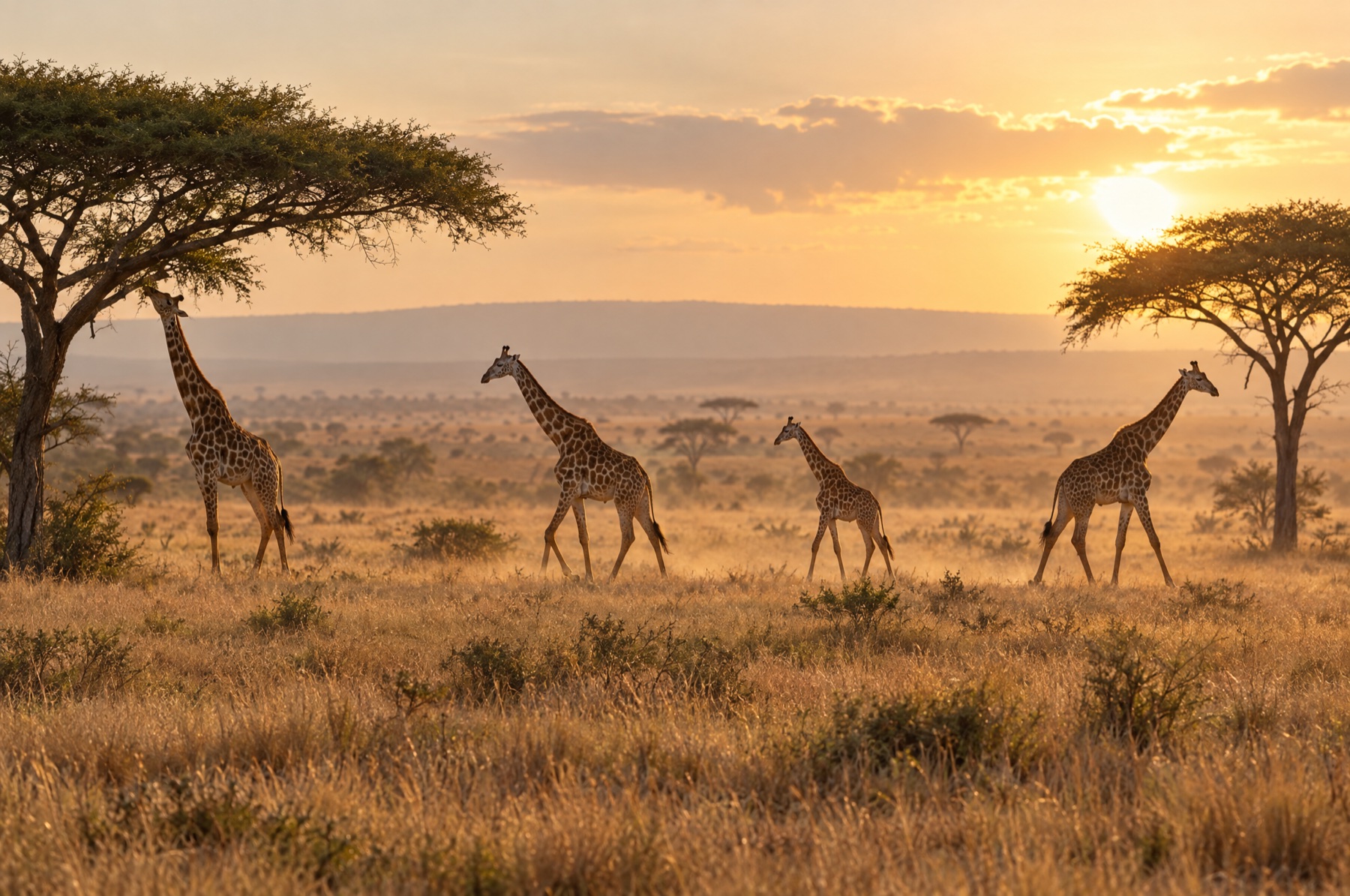
Tanzania
Africa's largest safari destination. The Serengeti's endless plains, the Ngorongoro Crater, the calving season, and Zanzibar's beaches at the end.
Why Tanzania.
Tanzania has the Serengeti, which is the most famous wildlife area on earth for good reason, and it has the Ngorongoro Crater, which is like nowhere else at all. Together they're the reason it's the most-visited safari country in East Africa.
It also has scale. The migration spends most of the year here, not in Kenya, so there's a version of it to see in almost any month: the calving in the south in January and February, the long march north through the middle of the year, the river crossings in the north from July. Add Tarangire's elephants and baobabs, and Zanzibar an hour's flight from the bush, and you have a two-week trip that never repeats itself.
Tanzania, on the east coast, south of Kenya
Getting thereOne stop, through Europe, the Gulf or Nairobi, to Kilimanjaro
VisaUS passports need a visa; apply online before you go
Swahili and EnglishEnglish in every camp and hotel
MalariaYes, everywhere except the crater rim; tablets are the norm
Where to go.
The northern circuit is the classic and where almost every first trip goes. The south and west are wilder, emptier, and for a second visit.
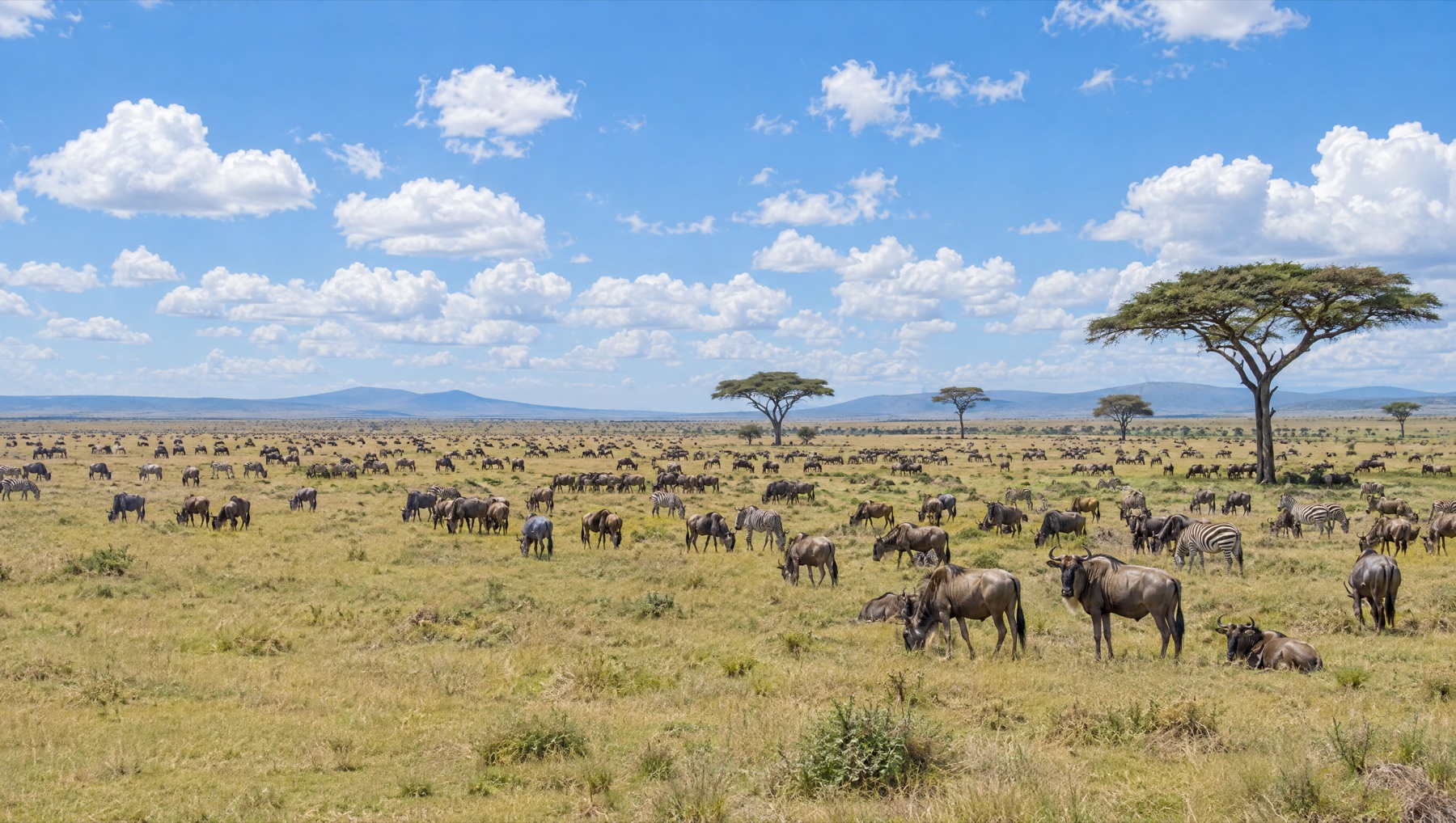
The Serengeti
The migration, the plains, the big cats
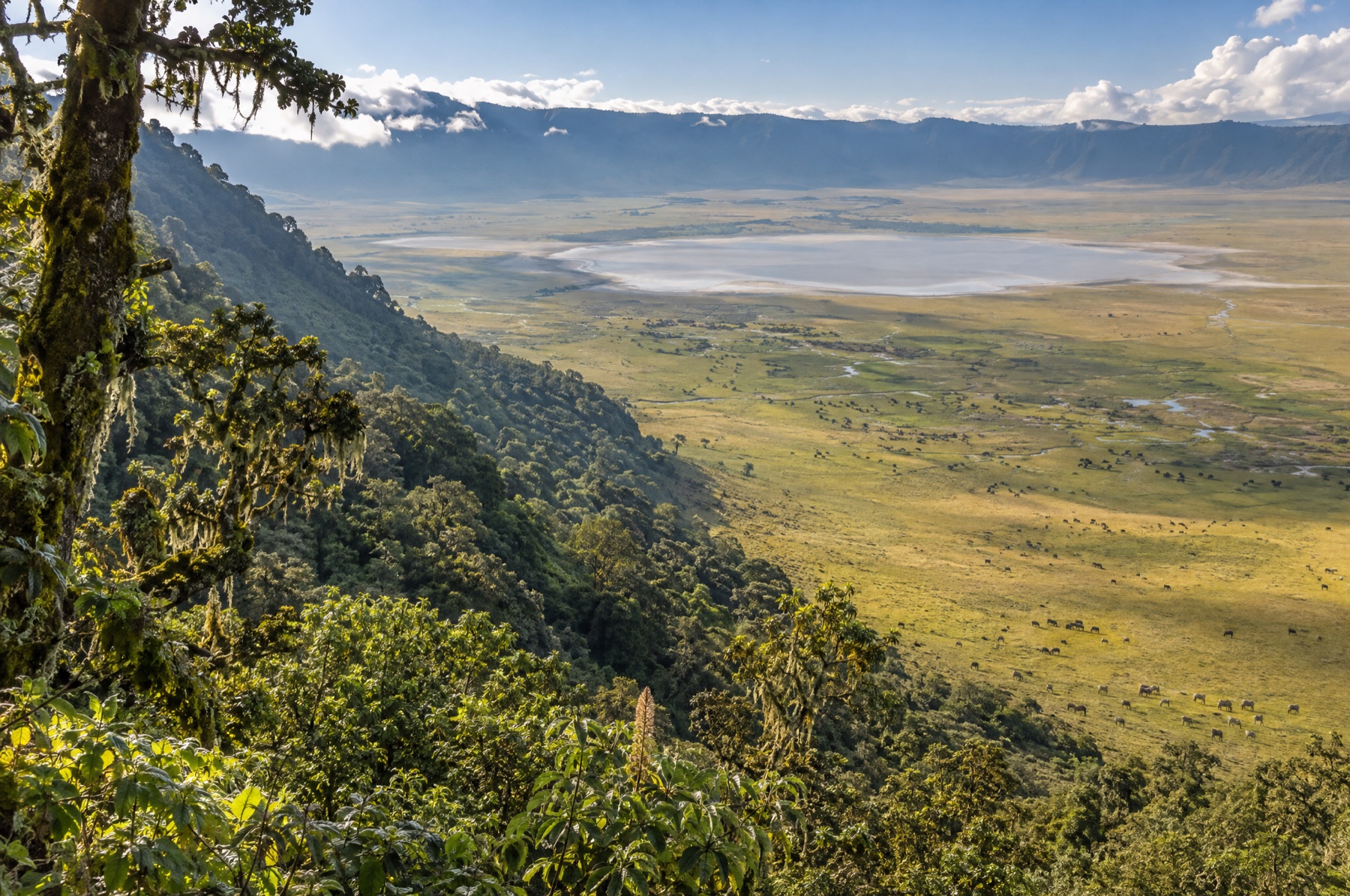
Ngorongoro Crater
A wildlife bowl two thousand feet deep
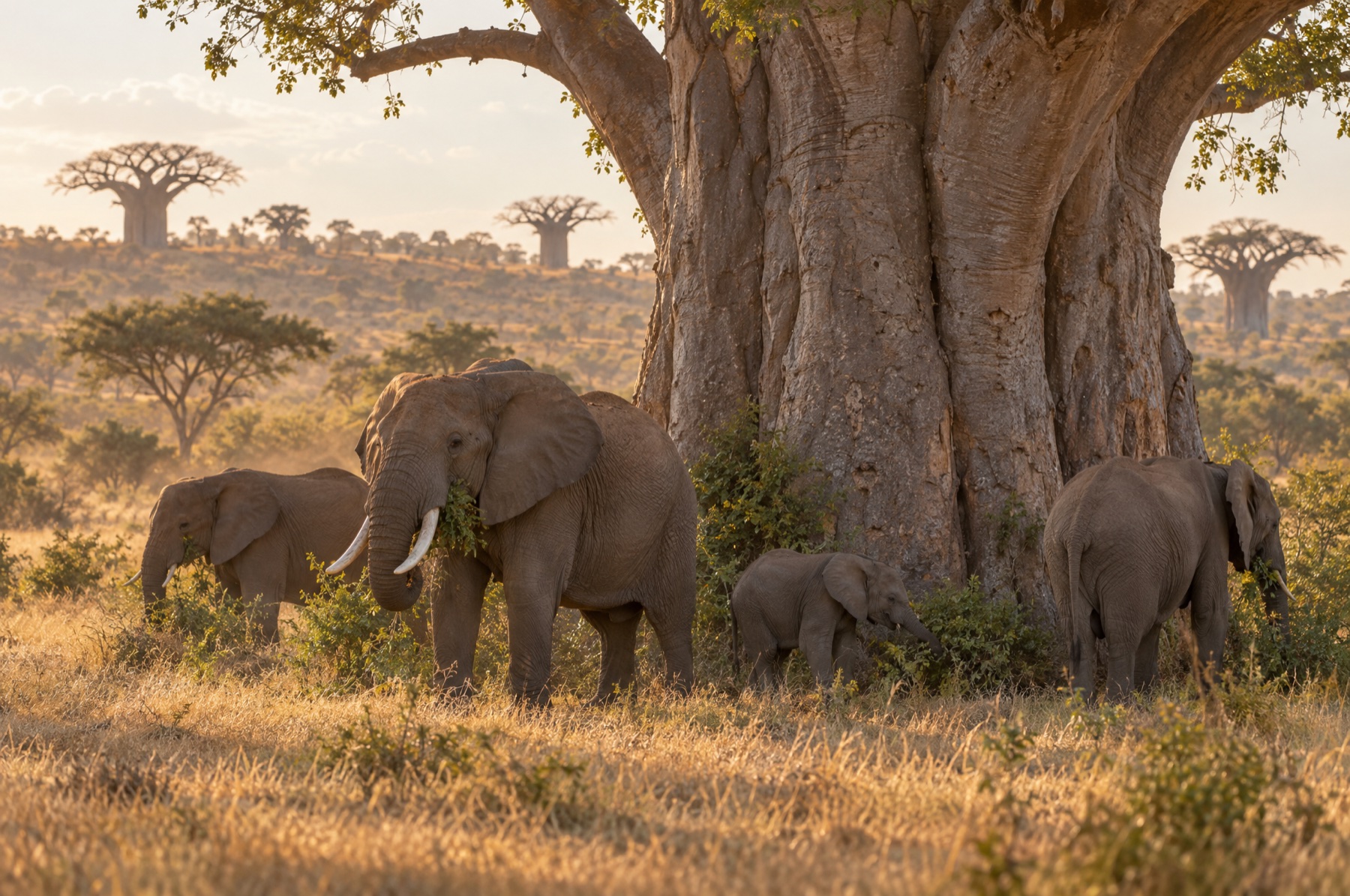
Tarangire and Manyara
Elephants, baobabs and a quieter start
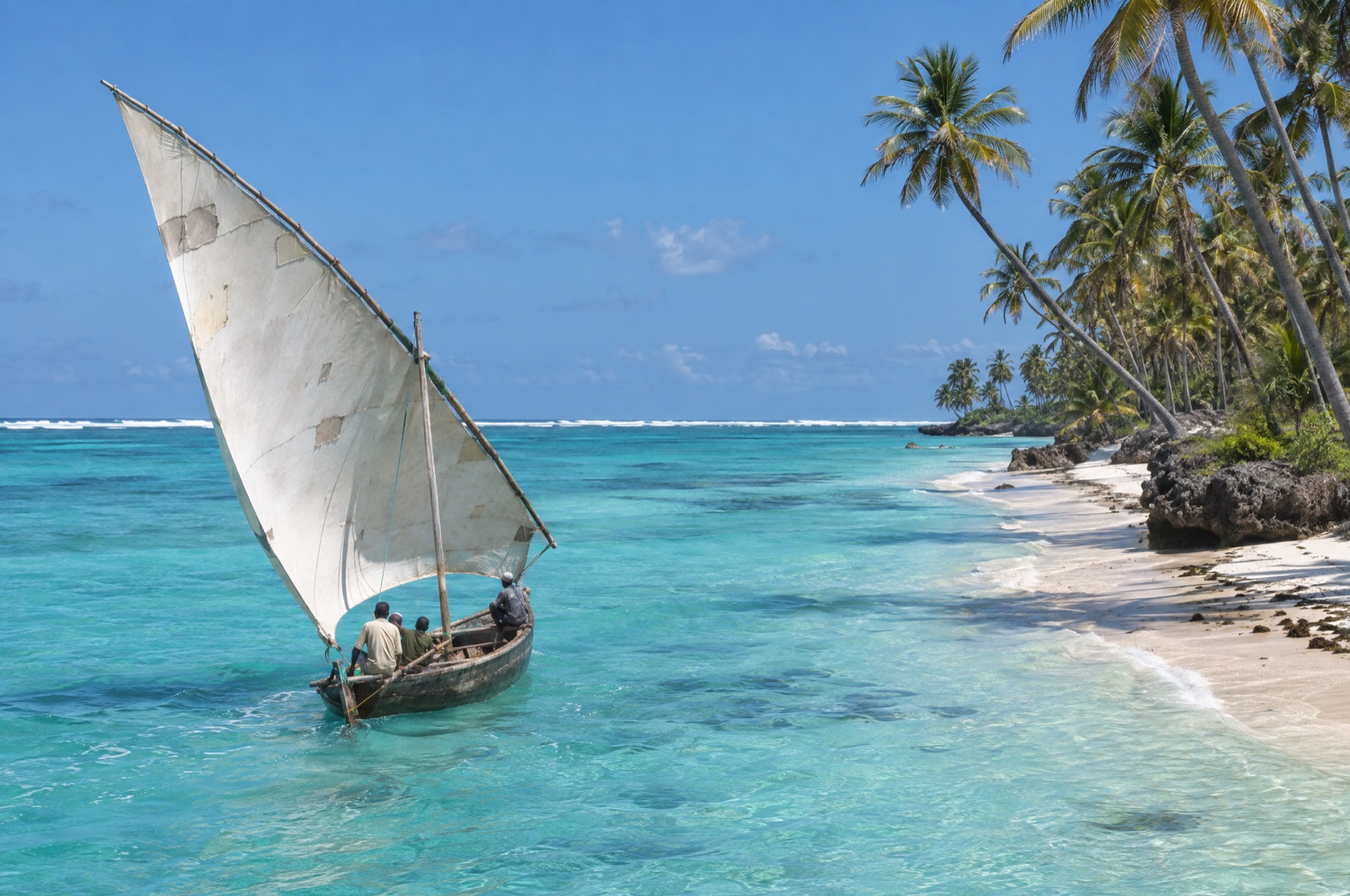
Zanzibar
Stone Town and the beaches
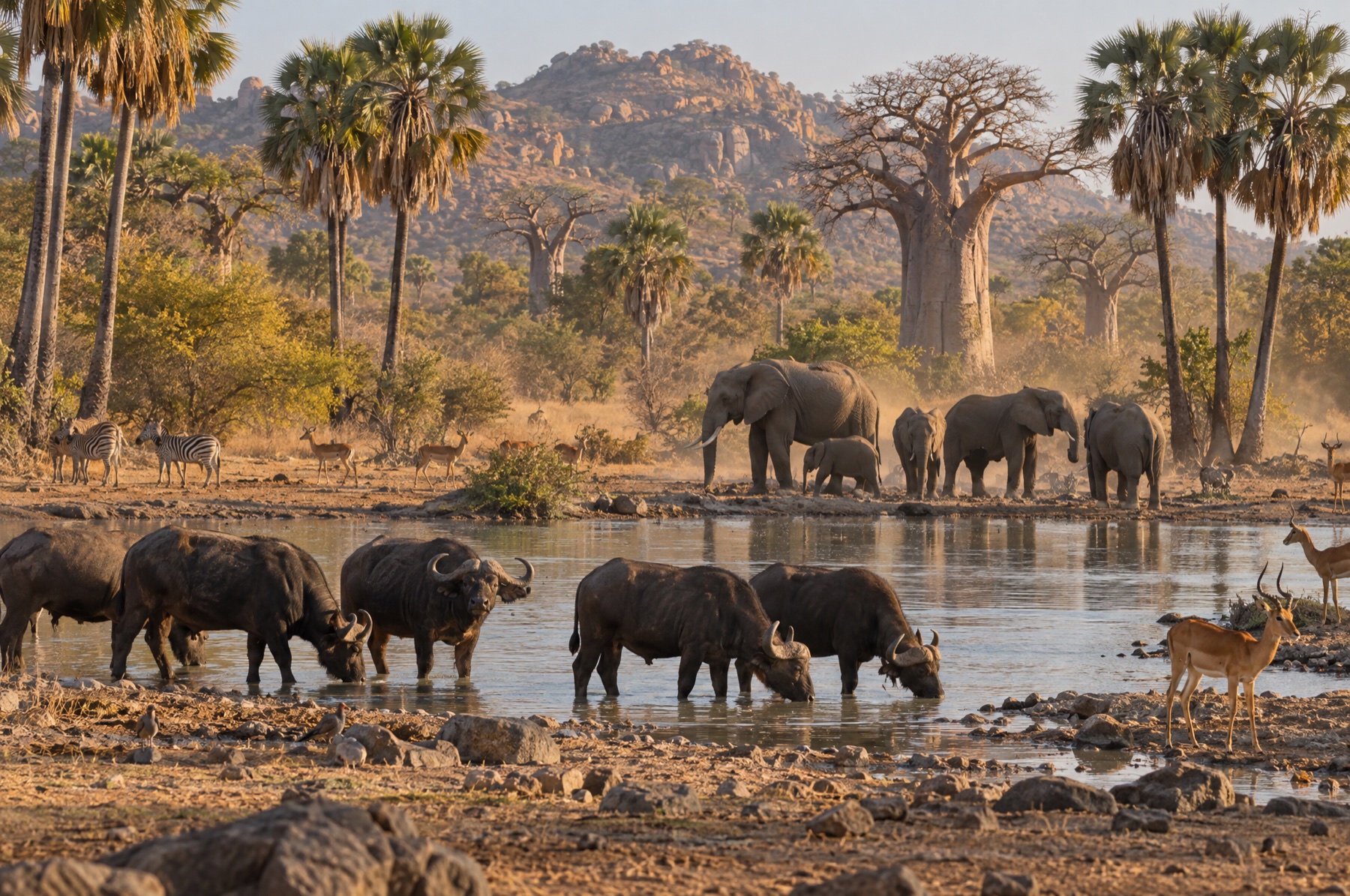
The South: Nyerere and Ruaha
Vast, remote and almost empty
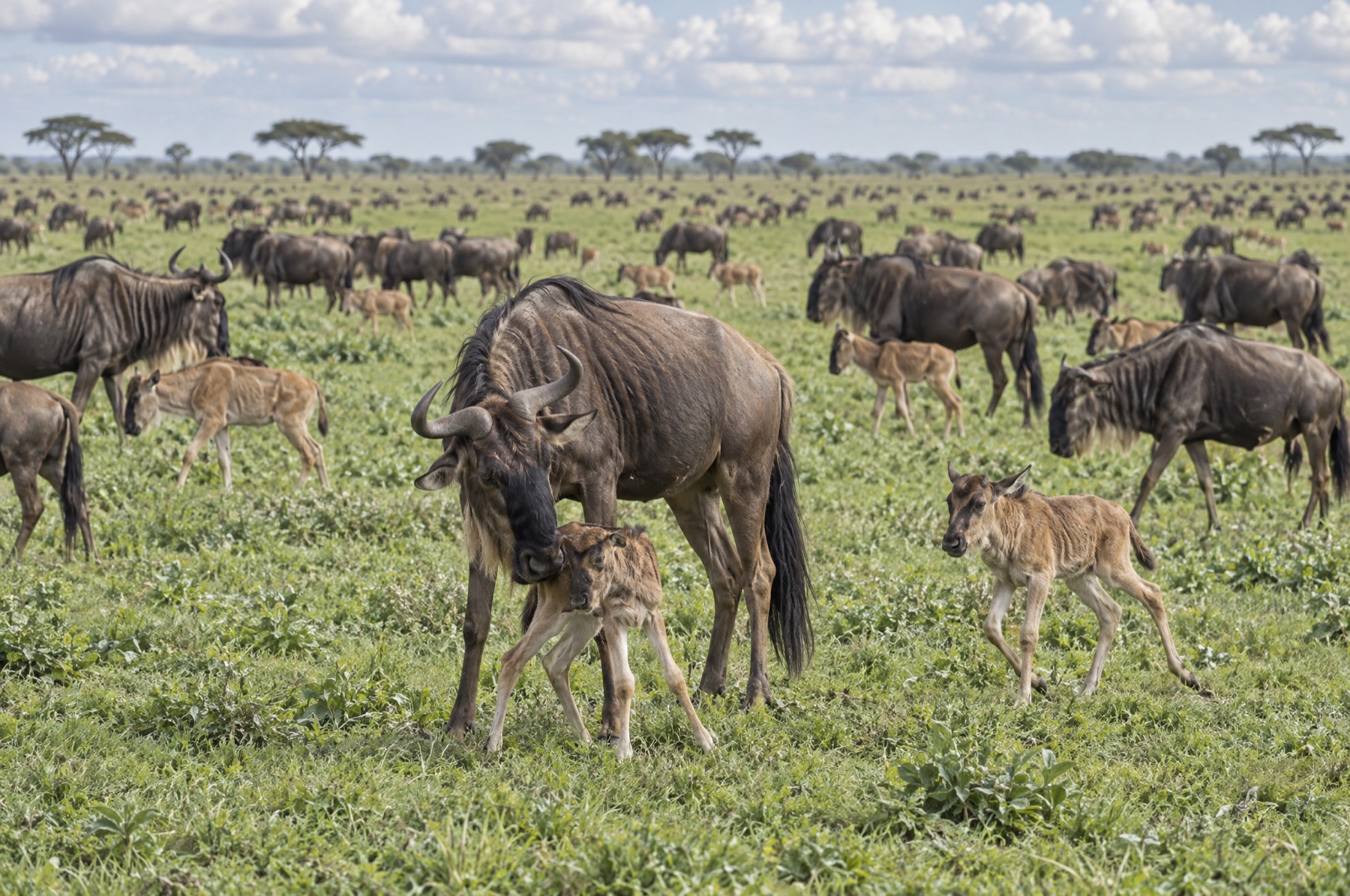
Follow the migration, wherever it is.
The herds don't stand still, so neither do the good camps. Several move with them: south to the short-grass plains for the calving in January, north to the Mara River by July. Tell us your dates and we'll put you where the animals are.
And the crater is the same in every month: a lost world with the densest concentration of big animals in Africa, seen in a single morning from the rim road. It's the one place we'd never leave out.
When to go.
The Serengeti is good in every month; the question is which part of it, and what the herds are doing when you're there.
J
F
M
A
M
J
J
A
S
O
N
D
Calving season
River crossings, north
General game viewing
Zanzibar
BestGoodNot the time
January and February are the calving season in the south: thousands of wildebeest born each day, and every predator in the region watching. June to October is dry and the herds are in the north and west, with river crossings from July. The long rains in April and May are the quietest and cheapest time, and some camps close. Zanzibar is at its best June to October and December to February; avoid April and May.
How long, and what it costs.
How Long You Need
Seven nights covers the northern circuit properly: Tarangire or Manyara, the crater, and the Serengeti. Add three or four on Zanzibar and you have the classic twelve-day trip. Fourteen if you want a fly-in camp deep in the Serengeti.
Roughly What It Costs
Our trips run from about $350 to $2,500 per person per day, and Tanzania spans the range depending on the camps you choose. One thing to know: Tanzania's park and conservation fees are among the highest in Africa and are built into every night, whatever the standard of camp. See what affects your budget.
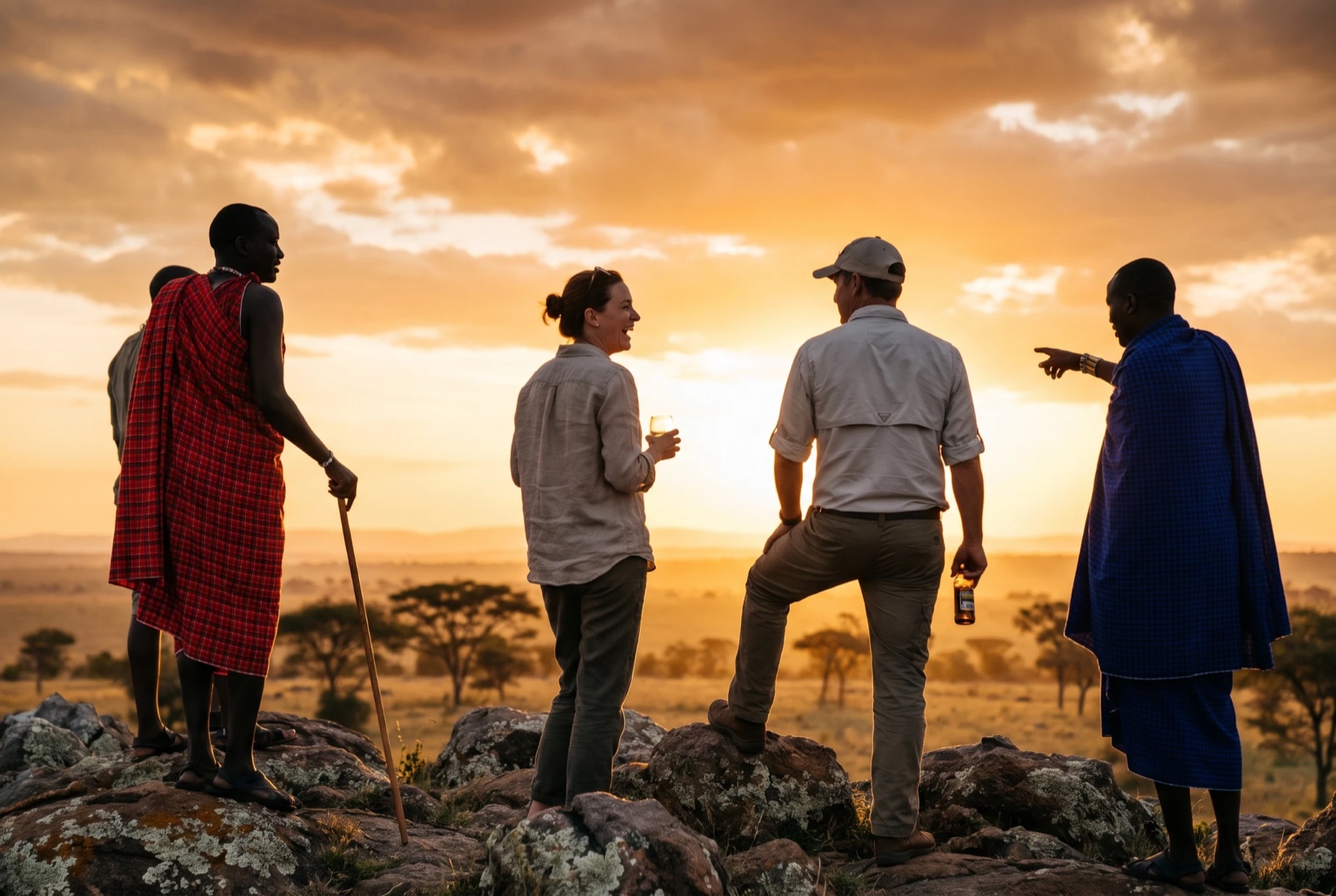
Fly, don't drive, and sleep somewhere intimate.
The traditional Tanzania safari is a long drive in a closed vehicle between big lodges. It's cheaper and it's how most people do it. It isn't what we recommend.
Fly into the Serengeti instead, stay in a tented camp of eight or ten rooms, and spend the hours you'd have lost on the road out in an open vehicle. It may cost a little more per night, but it's a far better trip.
Who it suits.
First-Timers Who Want the Biggest Show
The Serengeti and the crater together are the most dramatic safari week on the continent, in any month.
Anyone with Fixed Dates
Because the migration is somewhere in Tanzania almost all year, we can put you in front of it whenever you can travel.
Safari and Beach
Zanzibar is an hour from the Serengeti airstrips. Nowhere else does bush-to-beach this easily.
Second-Timers
The south and west, Nyerere, Ruaha and Katavi, are as remote as Africa gets, and almost nobody goes.
Three shapes a trip to Tanzania can take.
These are starting points, not packages. We change any of them to suit the people going.
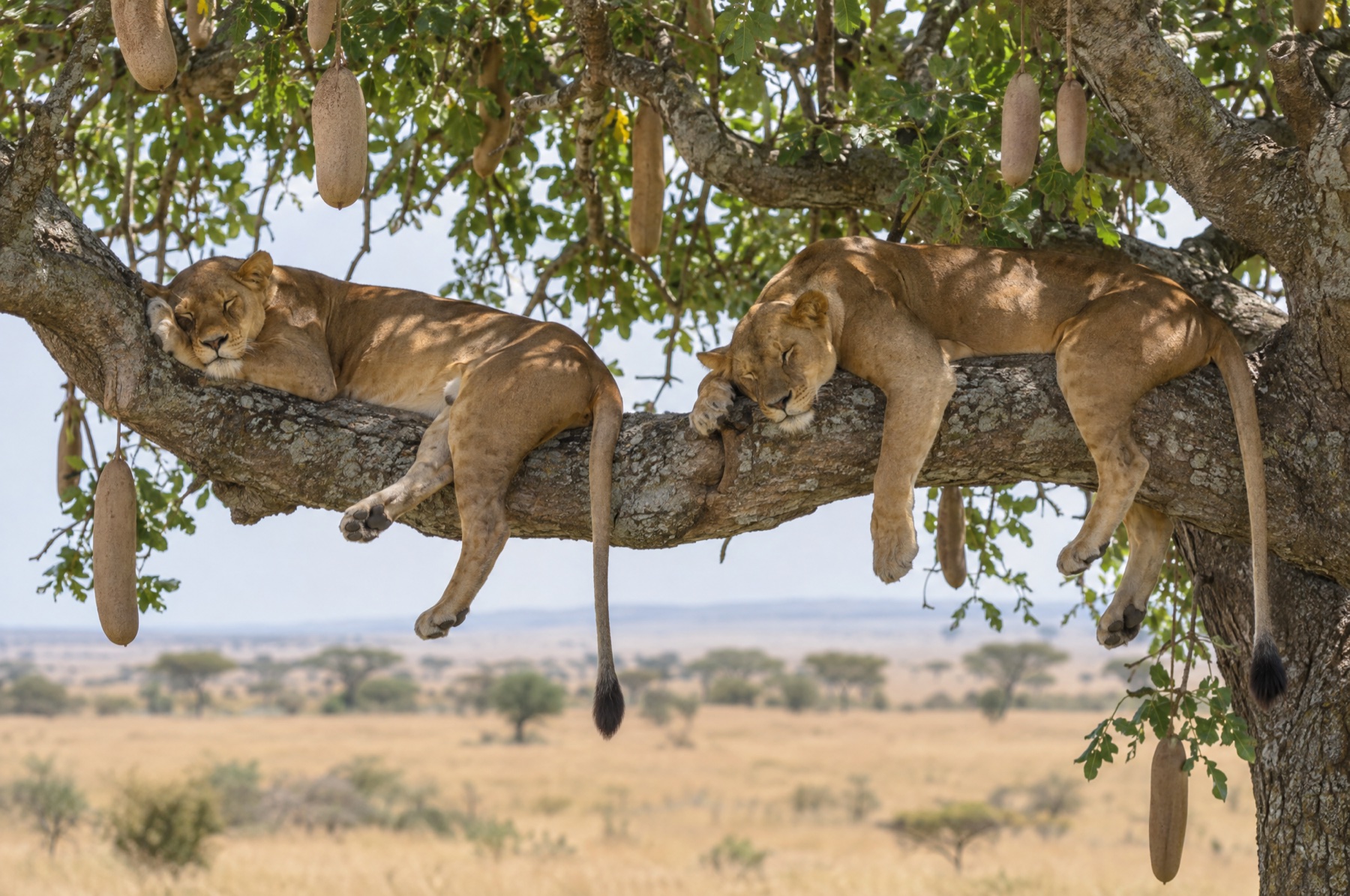
The Northern Circuit
Tarangire, the crater and the Serengeti, flying in and out. Seven or eight nights of the classic.
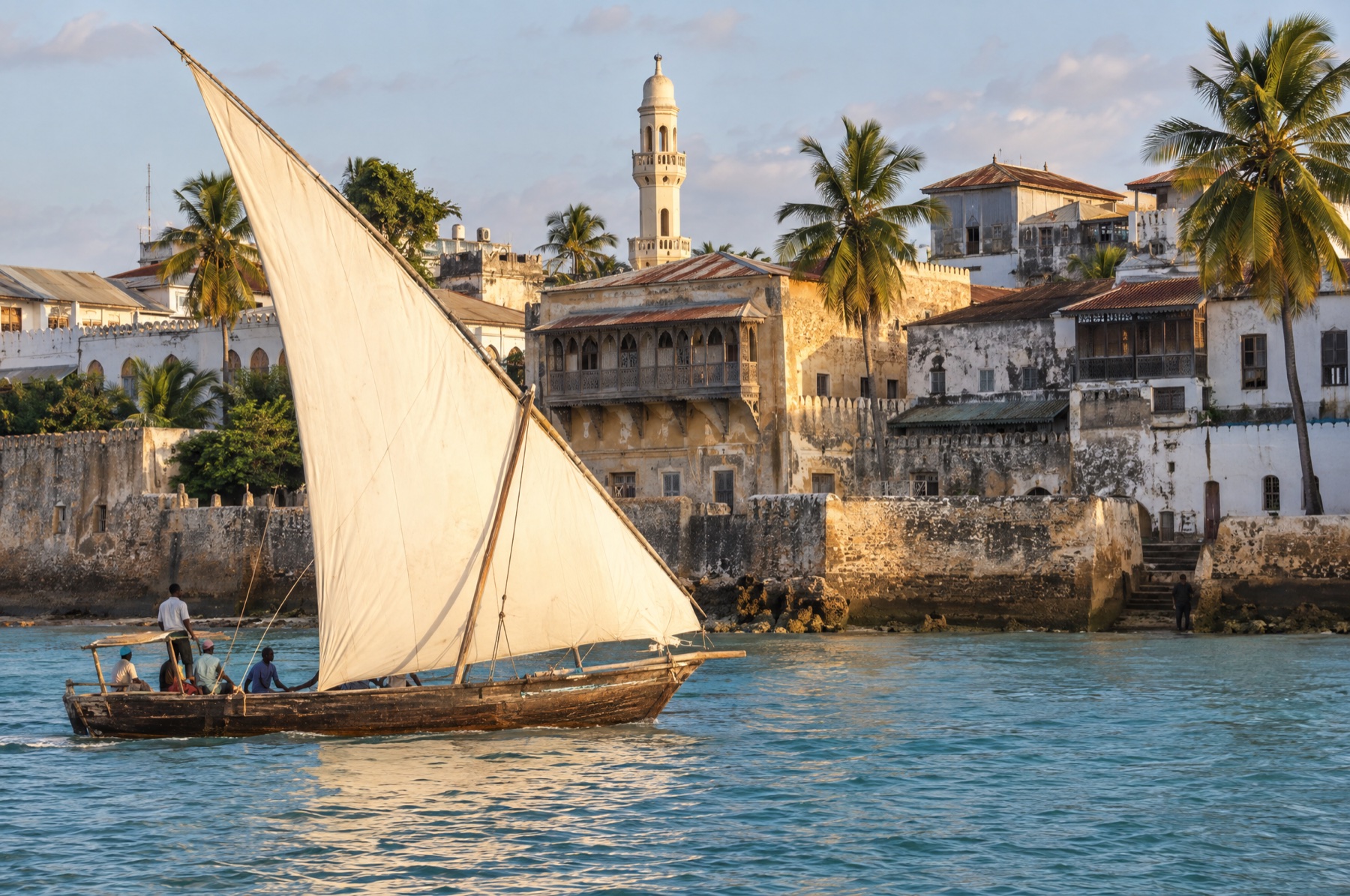
Safari and Zanzibar
The northern circuit, then four nights on the island. Twelve days, and the trip most people end up choosing.
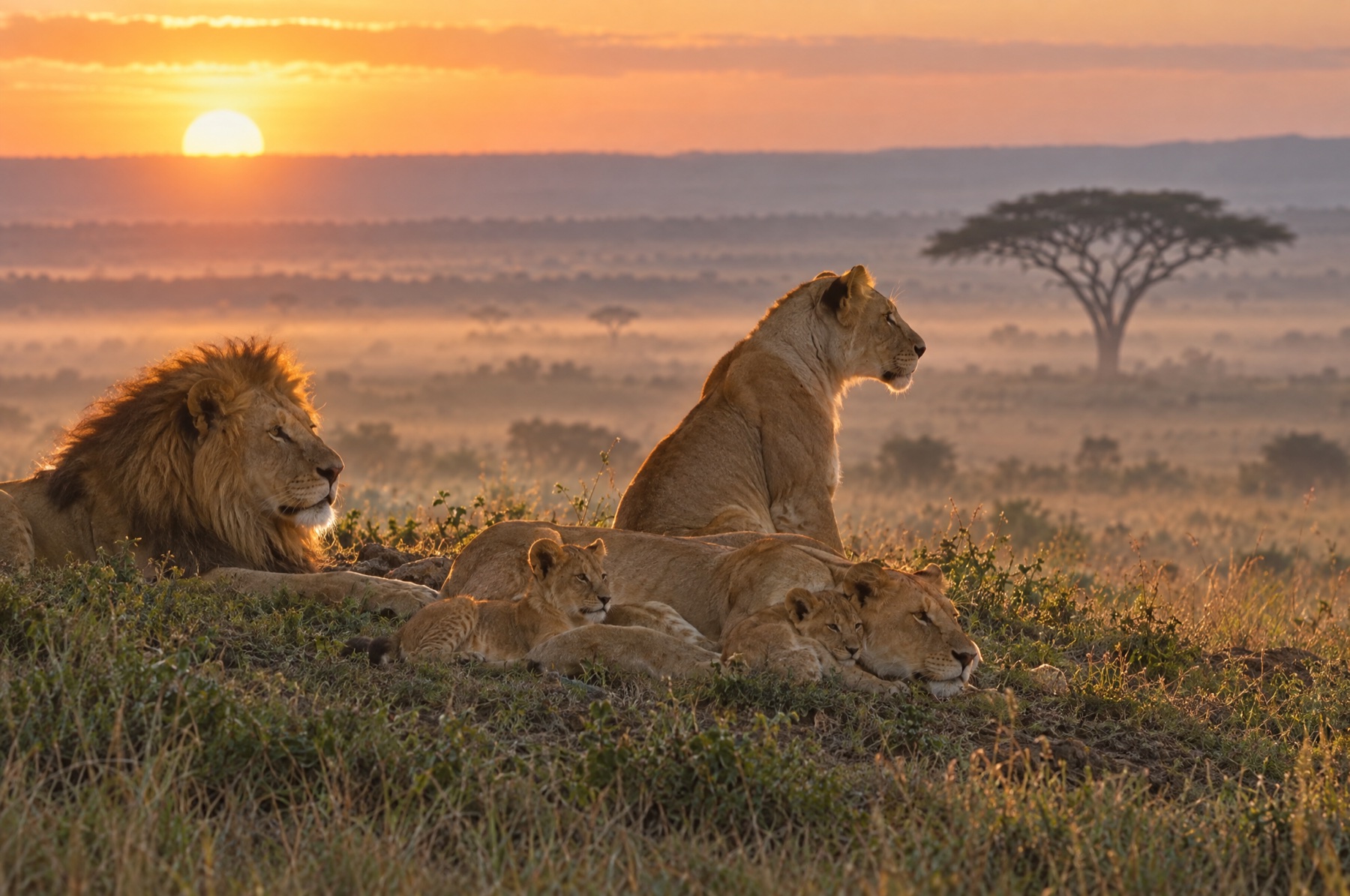
Kenya and Tanzania
The Mara and the Serengeti in one trip, the migration from both sides. Twelve to fourteen nights.
Good to know.
Getting There
No nonstop flights, but plenty of one-stop routes: KLM, Qatar, Emirates, Turkish, Ethiopian and Kenya Airways all reach Kilimanjaro airport, the gateway to the north. Zanzibar has its own international airport.
Entry
US and Canadian passports need a visa. It can be bought on arrival, but applying online beforehand saves a long queue. We'll tell you how.
Money
The Tanzanian shilling, but US dollars are accepted almost everywhere and are what most camps and guides prefer for tips.
Health
Malaria is present across the safari areas and Zanzibar; the crater rim is high enough to be nearly free of it. Your doctor or a travel clinic advises on tablets and any vaccinations.
Entry rules, health advice and airline schedules change. We confirm all of it for your dates before you book.
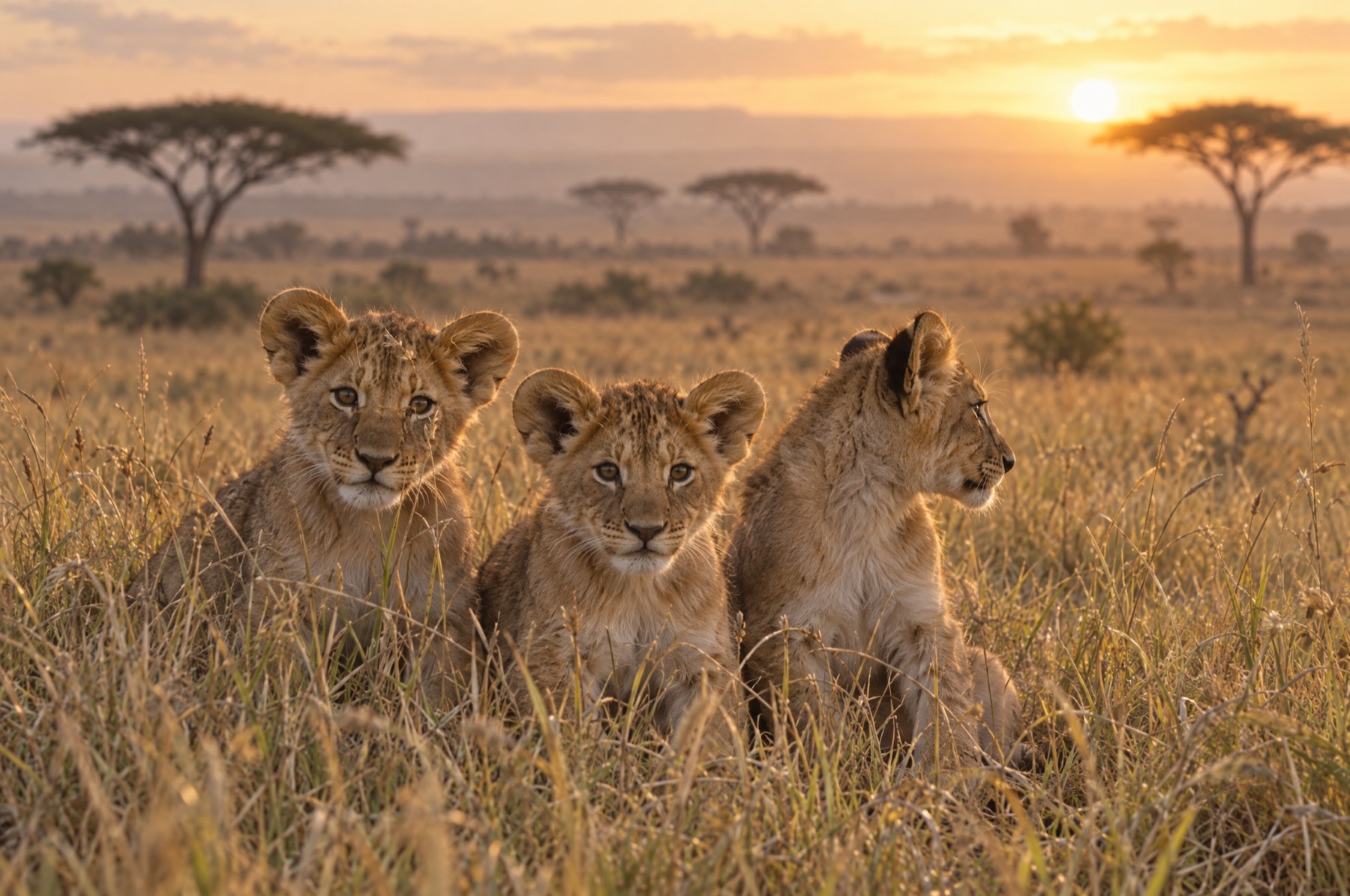
Plan your trip to Tanzania.
Tell us your dates. We'll tell you where the herds will be and build the trip around them.
Start Planning Your TripPrefer to talk? Call +1 512 844 5281.