Namibia
The landscape trip. The tallest dunes on earth, a coast of shipwrecks and fog, desert elephants, and skies so dark you can read by starlight.
Why Namibia.
Namibia is about the land, not the animals, though it has those too. It's the second least densely populated country on earth, and you can drive for an hour without passing another car.
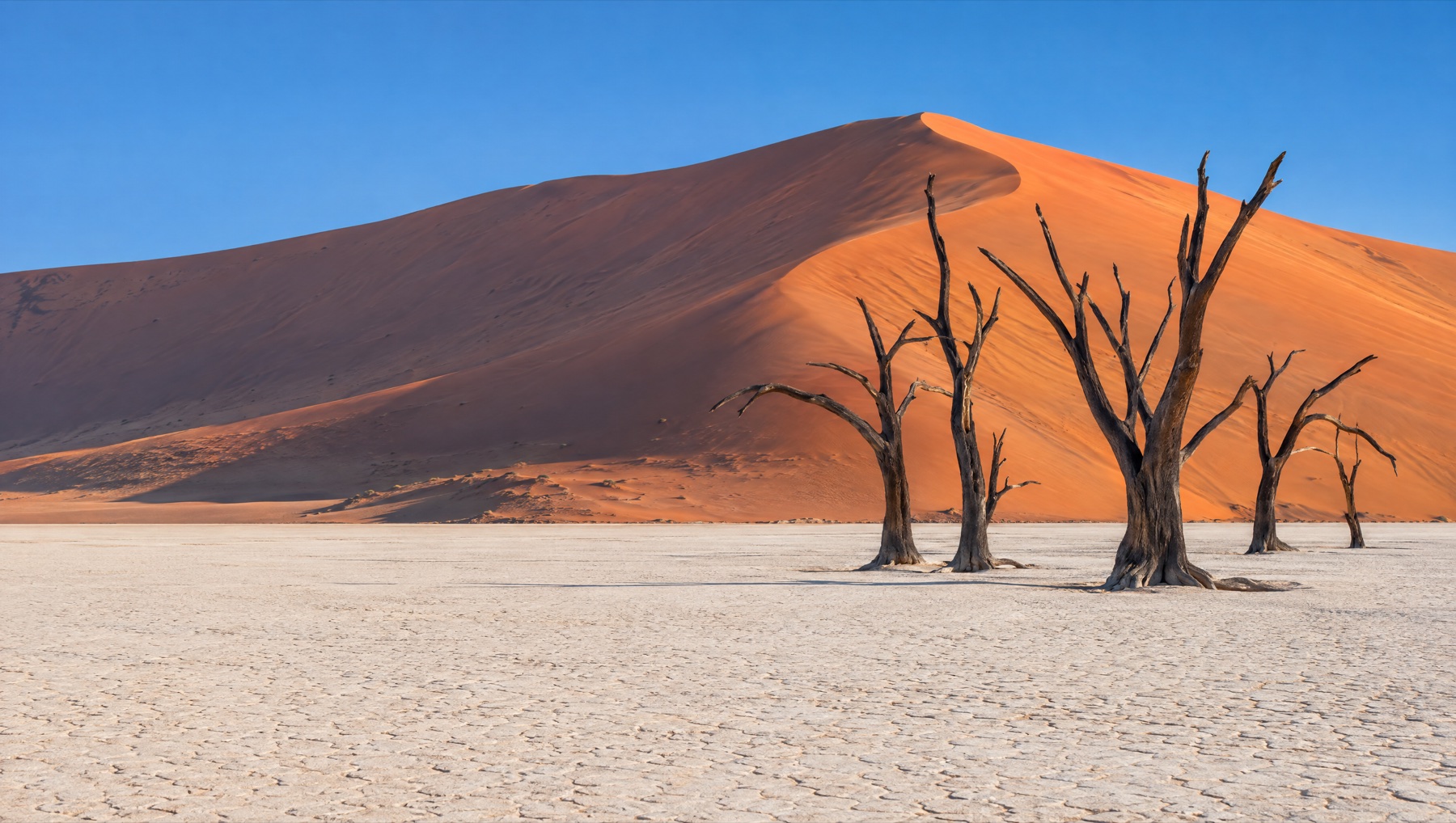
Sossusvlei's dunes are the ones in every photograph: red, sculpted, a thousand feet high, best climbed at dawn. The Skeleton Coast is fog, seals and rusting wrecks. Damaraland has elephants and rhino that have adapted to the desert. And Etosha's white salt pan draws animals to its waterholes like nowhere else. Much of the country is malaria-free, the roads are good and empty, and it's one of the few safari countries that works as a self-drive.
Namibia, on the Atlantic coast of Southern Africa
Where to go.
Namibia is large and the distances are significant. Give each region the days it needs rather than trying to see everything in one trip.
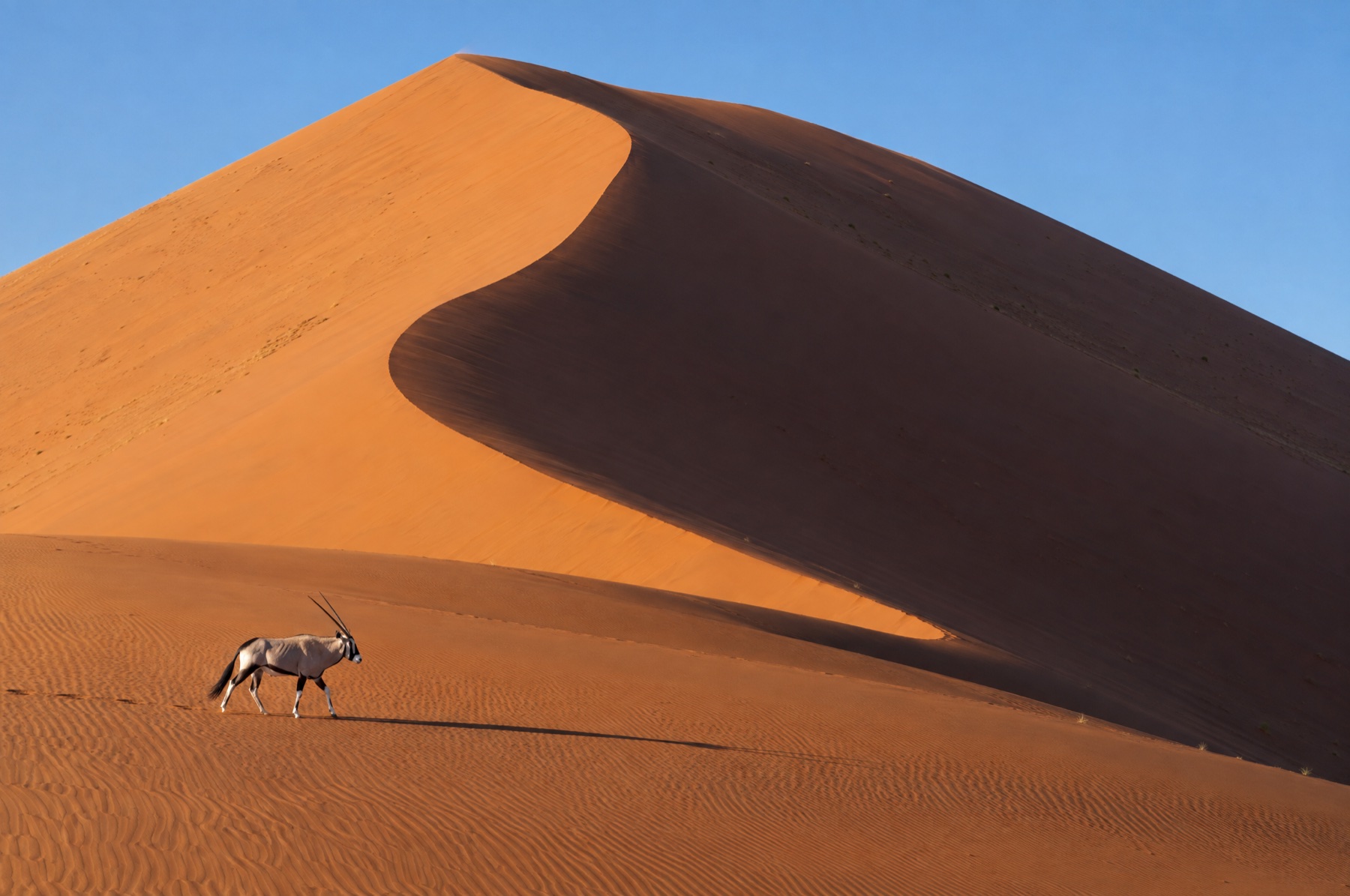
Sossusvlei and the Namib
The great red dunes
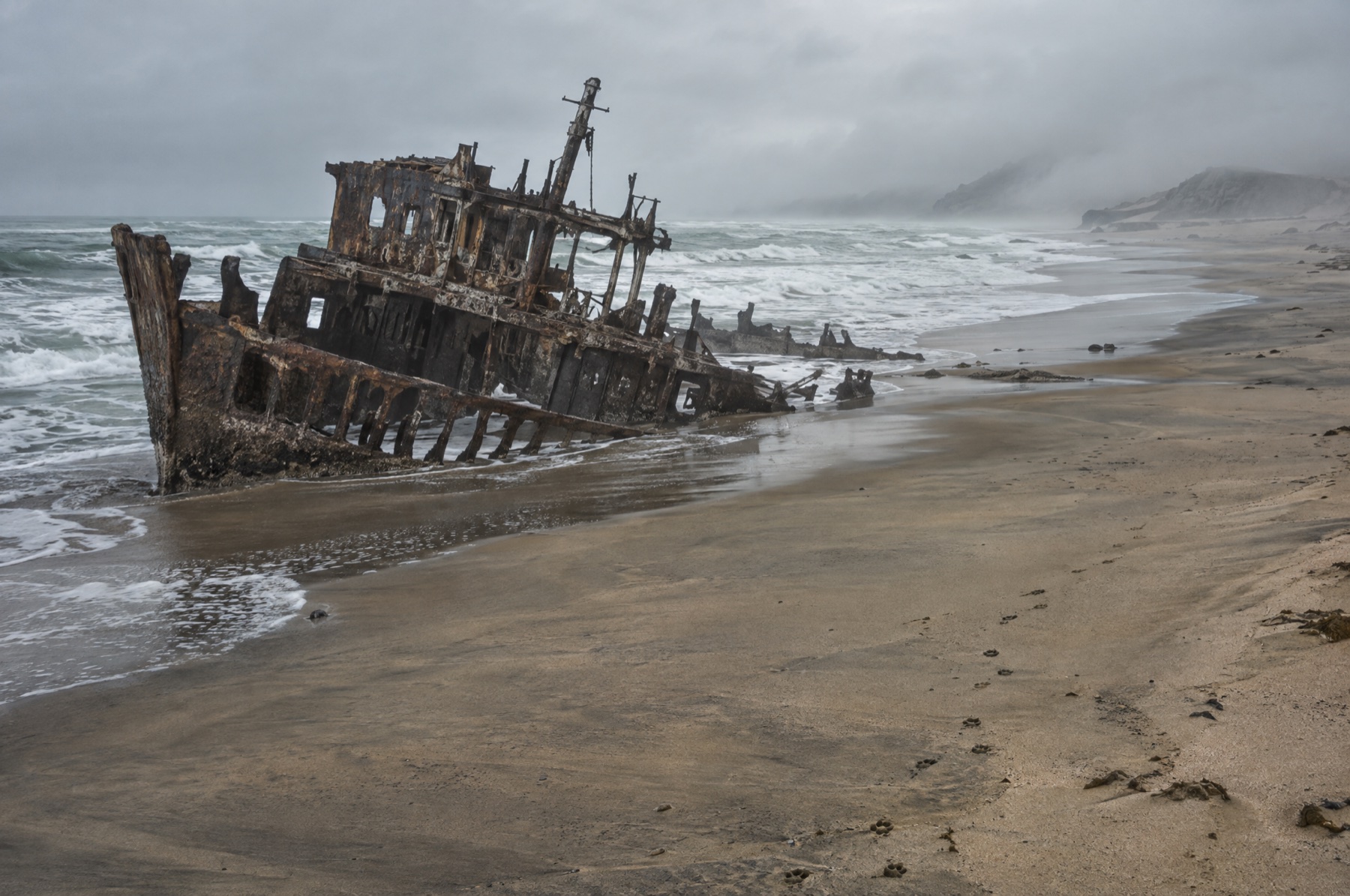
The Skeleton Coast
Fog, shipwrecks and desert lions
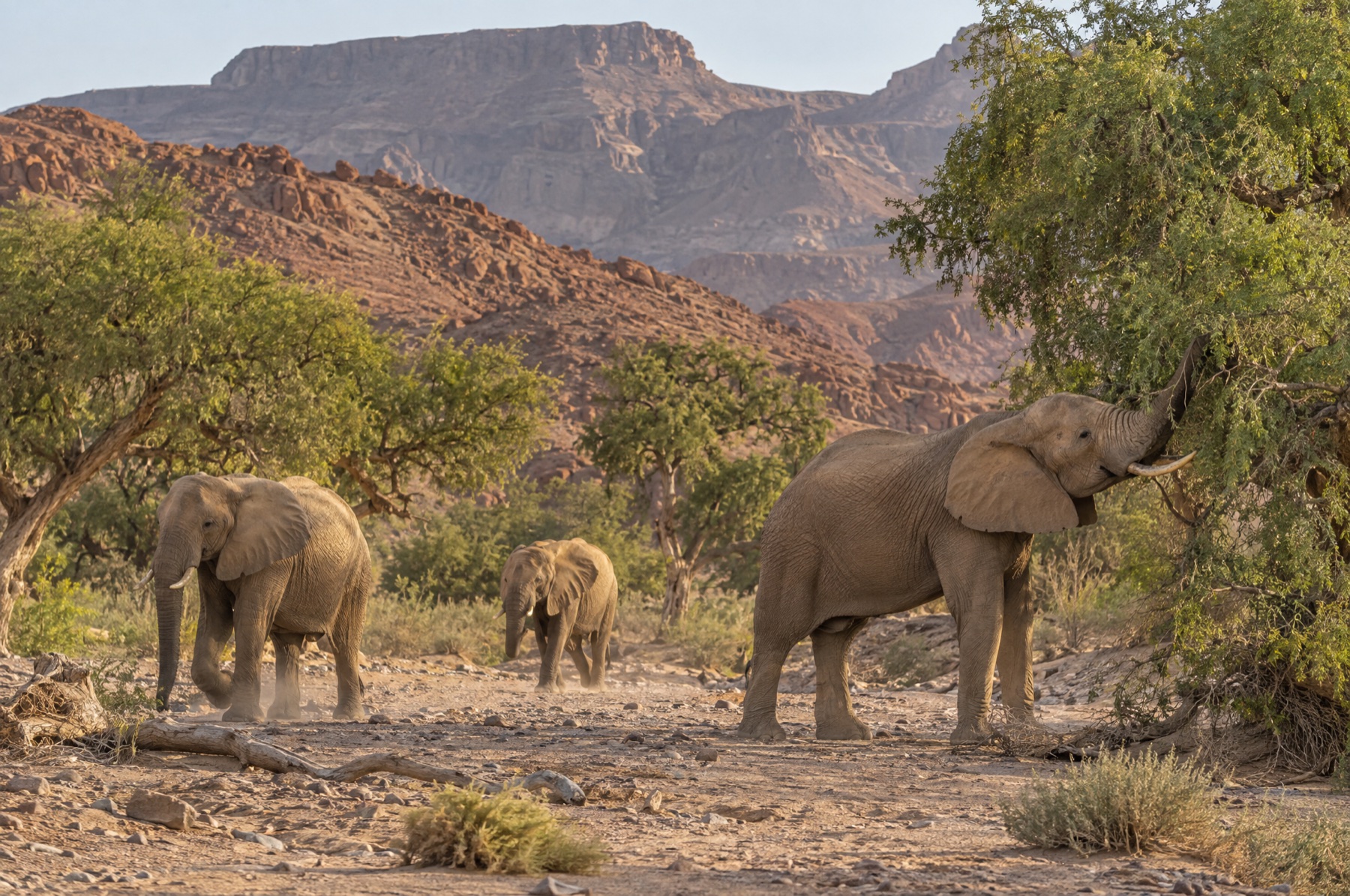
Damaraland
Desert elephants and rhino tracking
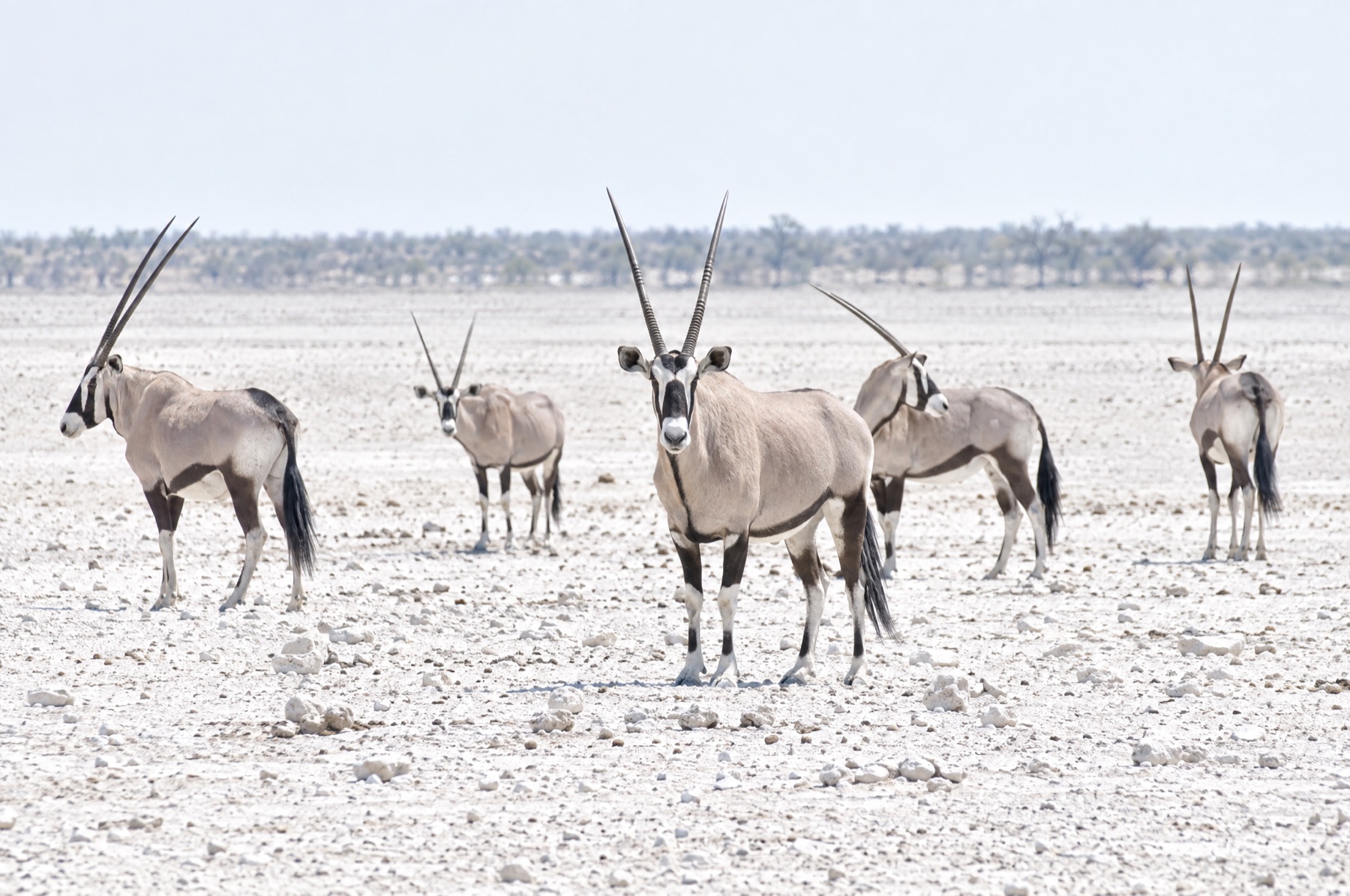
Etosha
Waterhole safari on a white salt pan
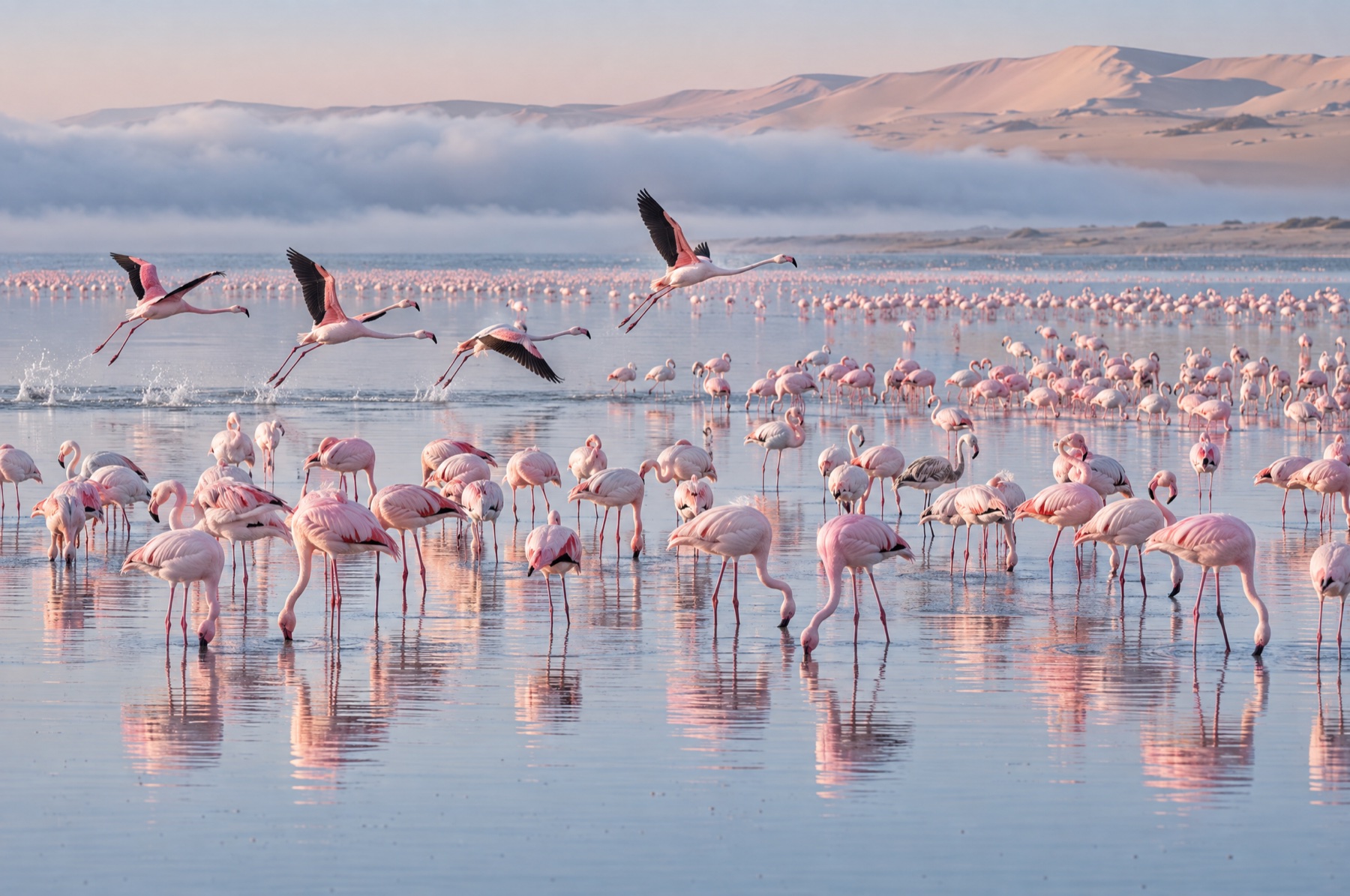
Swakopmund and the Coast
A German seaside town at the desert's edge
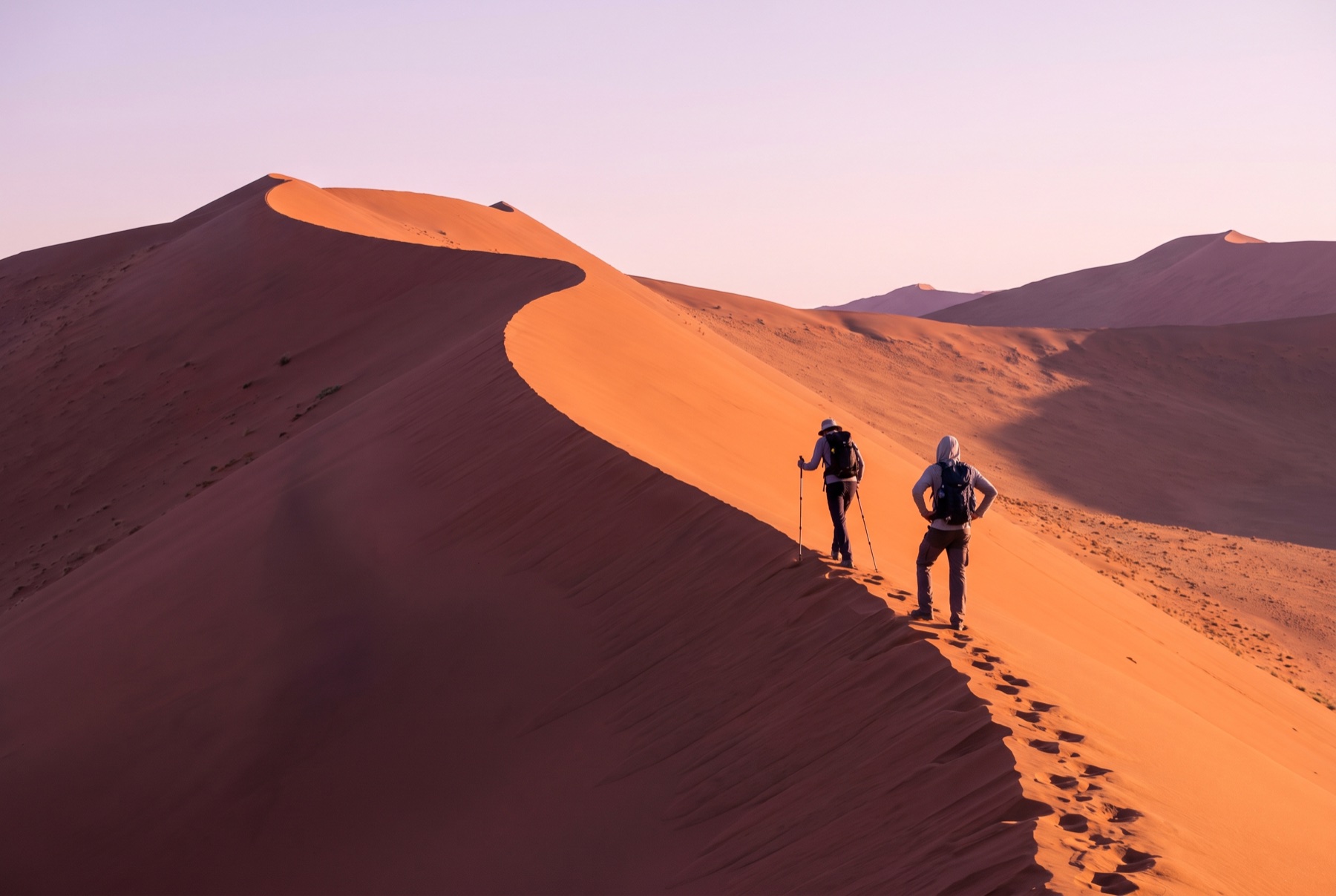
Climb a dune before the sun is up.
You start in the dark, in the cold, and walk the knife edge of a dune as the light comes. Then you look down into Deadvlei, a white clay pan with nine-hundred-year-old dead trees standing black against orange sand, and understand why people fly halfway around the world for it.
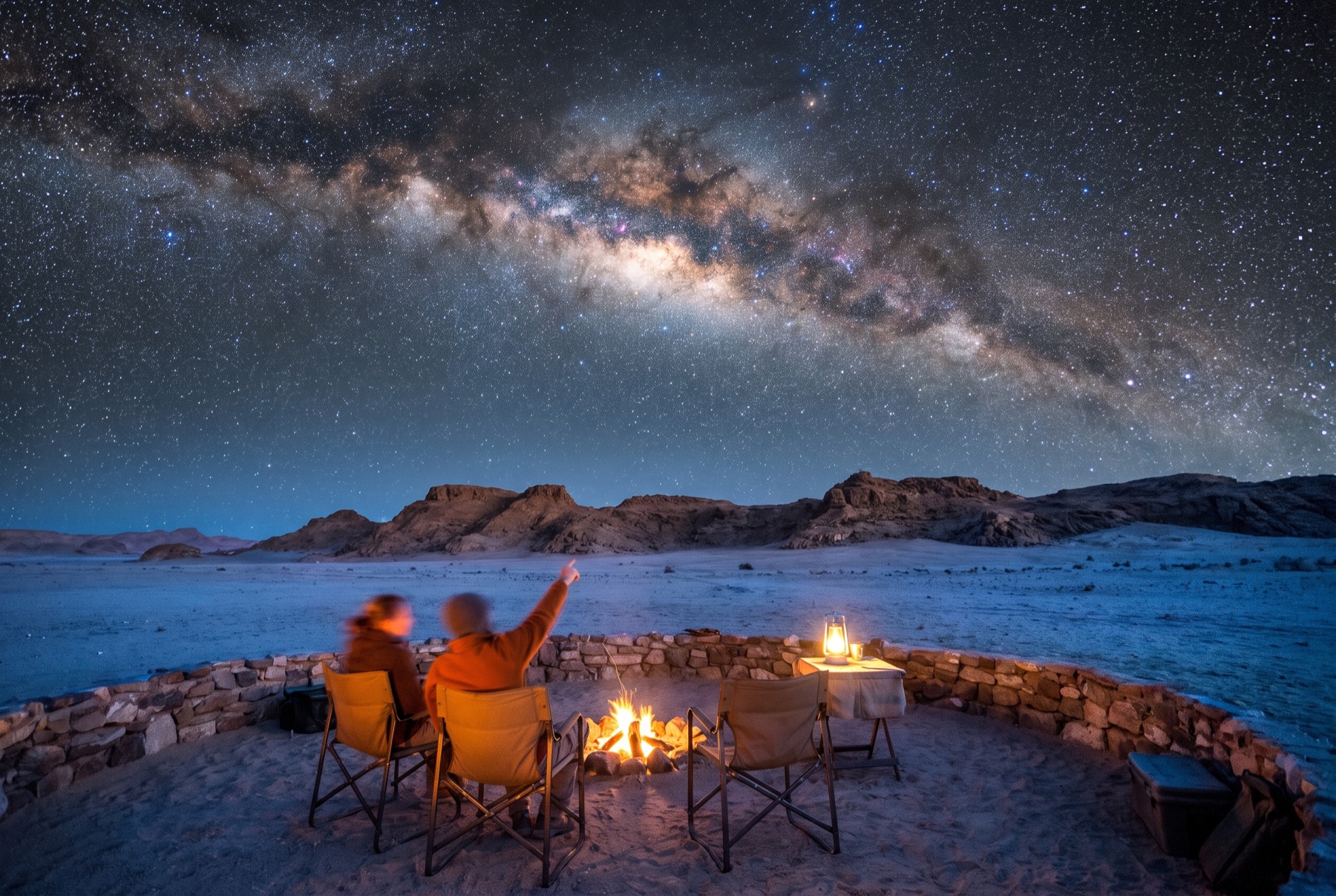
Namibia does this again and again: the seal colony at Cape Cross, the Skeleton Coast from a light aircraft, the Milky Way from a camp with no electric light for a hundred miles. There's wildlife, but the landscapes are the reason to come.
When to go.
Namibia works nearly all year. The dry season is best for Etosha's animals; the shoulder months are best for the desert, when it's not too hot to walk.
May to October is dry and cool, with cold desert nights, and Etosha's waterholes are at their busiest from July. April, May, September and October are the sweet spot: warm days, clear skies, the dunes walkable. December to March is hot, with occasional dramatic storms that turn the desert briefly green; the light is extraordinary and prices drop. The coast is foggy and cool in every month; pack a jacket even in summer.
How long, and what it costs.
How Long You Need
Ten nights is the minimum for three regions with the driving or flying they need. Twelve to fourteen is comfortable and lets you add Etosha or the far north. Anything under a week and you're spending it all on the road.
Roughly What It Costs
Our trips run from about $350 to $2,500 per person per day, and Namibia spans the range. A guided or self-drive road trip with good lodges sits toward the lower end; a fly-in itinerary with light aircraft and the best desert camps is at the top. See what affects your budget.
Fly it, drive it, or both.
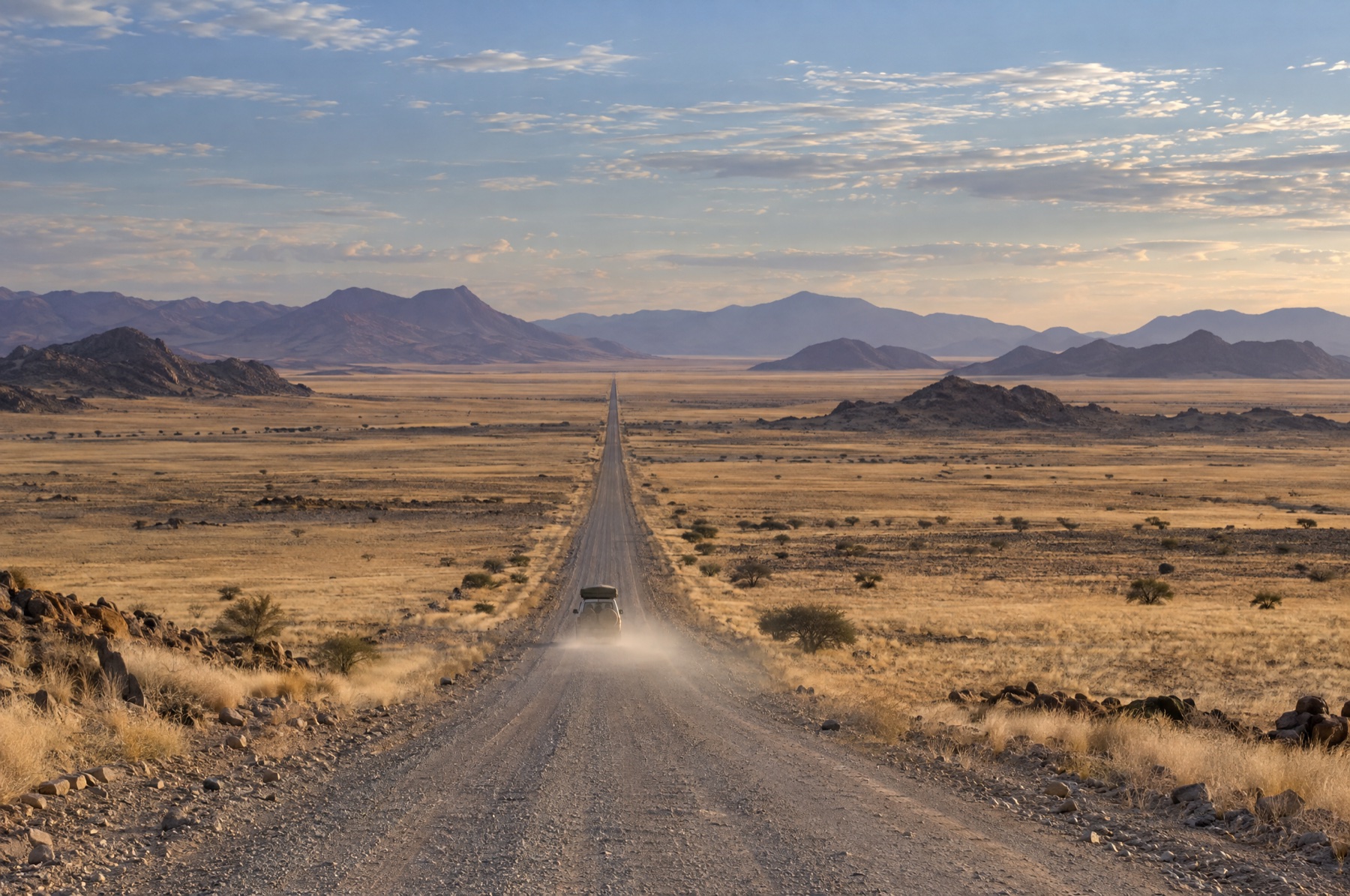
Namibia is the one safari country where driving yourself is a real option: the roads are good, the traffic is nonexistent and the distances are part of the experience. Or you fly, and see the dunes and the coast from above, which is a sight in itself.
For most of our clients we mix the two: a private guide and vehicle for the south, light aircraft for the coast and the north. We'll tell you which suits you.
Who it suits.
Photographers and Landscape People
There is no more photogenic country in Africa. Every hour of light does something new to it.
Anyone Who Wants to Avoid Malaria
The dunes, the coast and the south are entirely malaria-free, and Etosha is low-risk. Namibia is the easy answer for families and the cautious.
Road-Trippers
Good roads, no traffic, and camps at the end of each day. If you love a drive, this is the one.
Second and Third Safaris
You've seen the animals. Now come for the landscapes, which no other African country has.
Three shapes a trip to Namibia can take.
These are starting points, not packages. We change any of them to suit the people going.
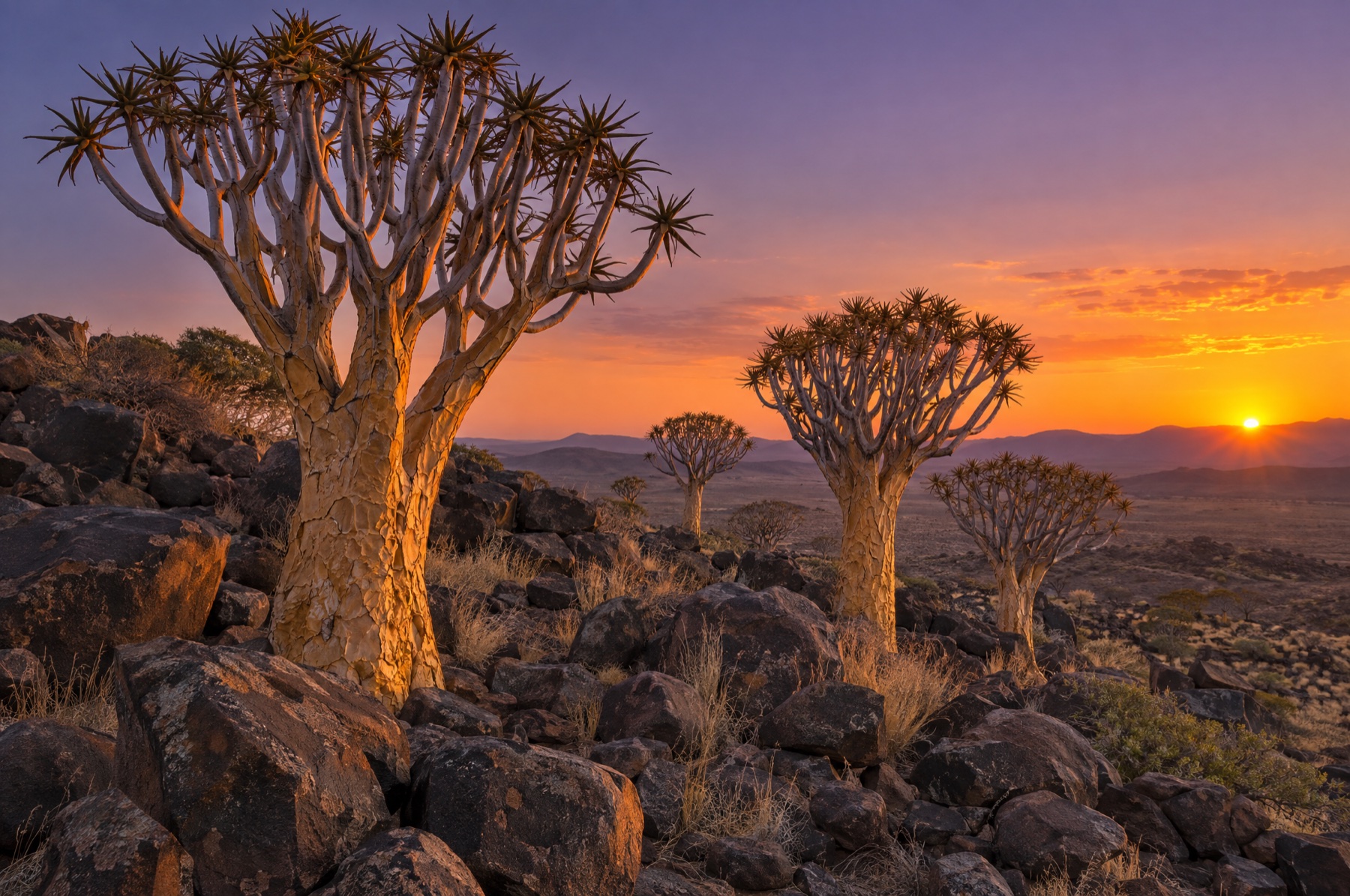
The Desert Classic
Sossusvlei, Swakopmund and Damaraland. Ten nights, by road or air, through the landscapes Namibia is famous for.
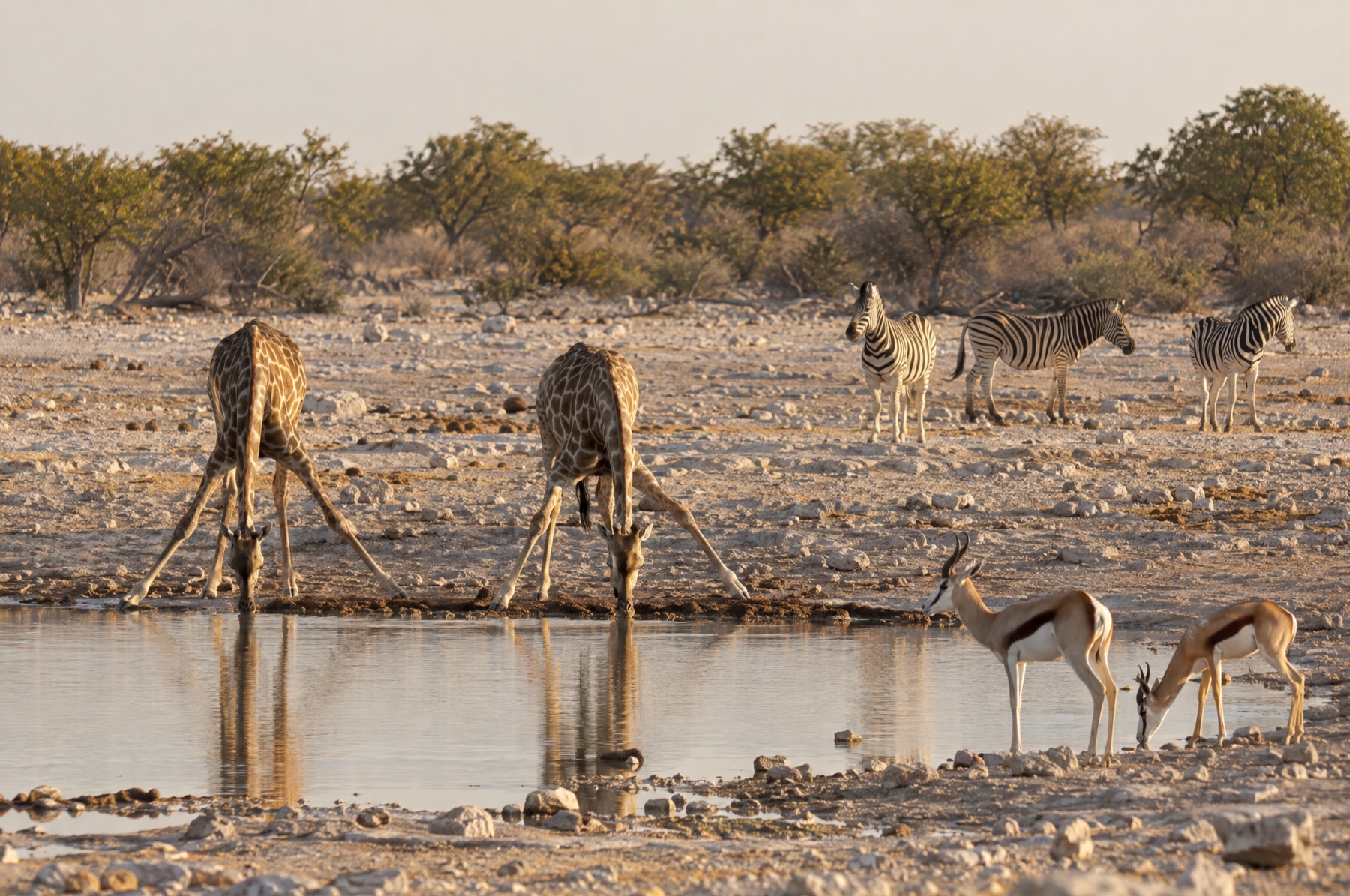
Desert and Wildlife
The dunes, then Damaraland's desert elephants, then Etosha. Twelve nights that add the animals to the scenery.
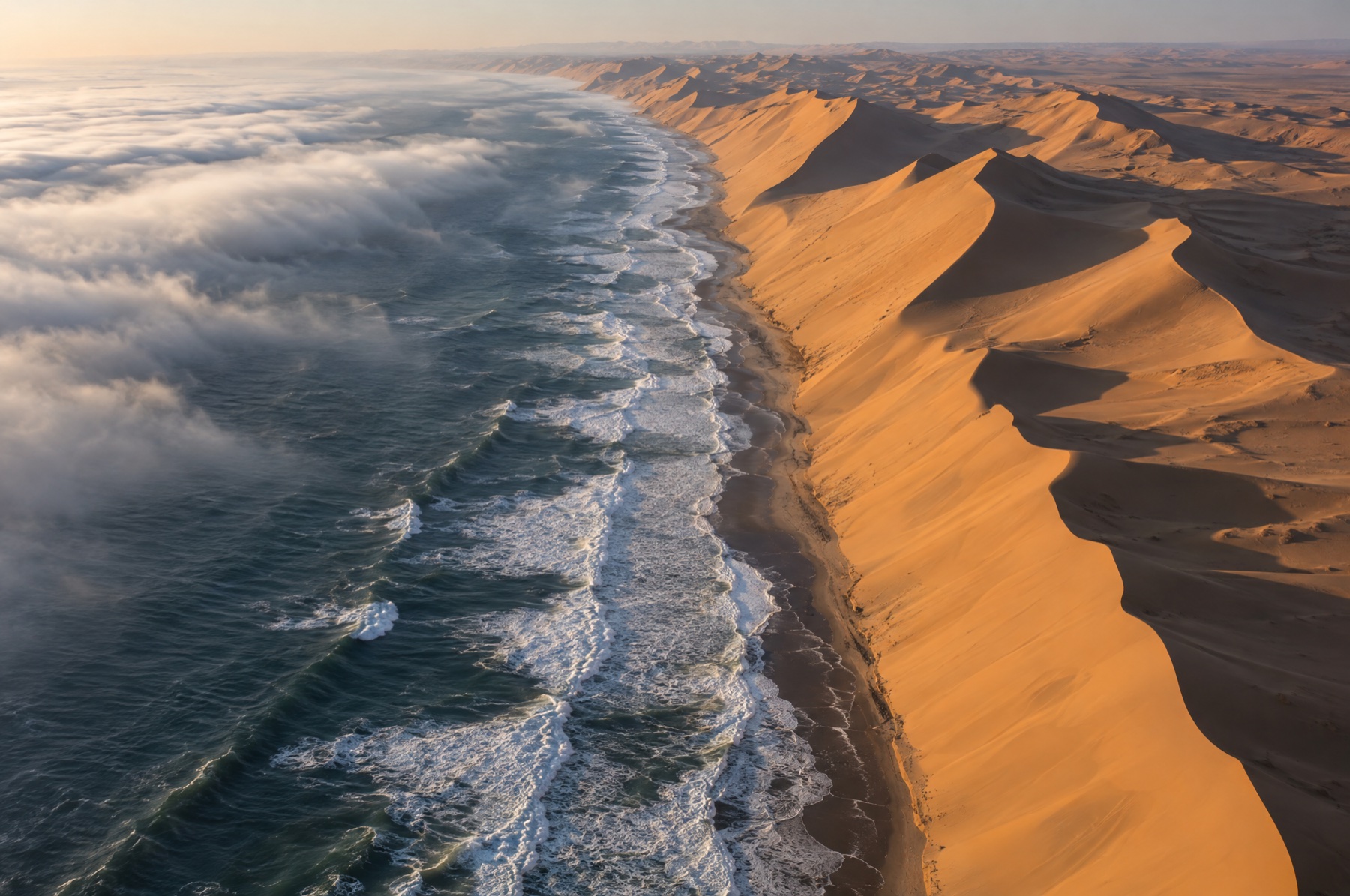
The Fly-In
Light aircraft between the dunes, the Skeleton Coast and the far north. Eight nights, no driving, and the coast from the air.
Good to know.
Getting There
No nonstop flights, but several one-stop routes to Windhoek: through Frankfurt, Doha, Addis Ababa, Johannesburg or Cape Town. We'll find the connection that fits your dates. From there it's road or light aircraft.
Entry
Namibia introduced a visa on arrival for US and Canadian passport holders in 2025, paid at the airport. We'll confirm the current fee and process for your dates.
Money
The Namibian dollar, pegged to the South African rand, which is also accepted. Cards work in towns and lodges.
Health
The Namib, the coast and the south are malaria-free. Etosha and the far north carry a low, seasonal risk, highest in the summer rains. Your doctor or a travel clinic advises.
Entry rules, health advice and airline schedules change. We confirm all of it for your dates before you book.
Plan your trip to Namibia.
Tell us how you like to travel, by road or by air, and we'll build the route around it.
Start Planning Your TripPrefer to talk? Call +1 512 844 5281.